
Table of Contents
- Start with Your Target Species
- Fishing Lure Colors for Water Clarity
- How to Match Lure Size to Fish
- Types of Fishing Lures and Their Uses
- Fishing Lure Action and Retrieval Techniques
- Adjust Your Selection for Water Depth and Temperature
- Troubleshooting When Lures Aren't Producing
- Frequently Asked Questions
Last Updated: October 14, 2026
Start with Your Target Species
The first rule of selecting fishing lures is simple: know what you're trying to catch.
Bass are aggressive hunters that chase larger lures and hard baits. Trout are cautious and prefer smaller, natural presentations. Saltwater species like stripers and mackerel want flash and speed.
Here's what changes when you shift species:
- Bass: Prefer larger lures (2-4 inches), darker colors, and aggressive retrieves
- Trout: Want smaller offerings (1-2 inches), natural colors, and slower presentations
- Pike and Musky: Go after big, bold lures that create noise and movement
- Saltwater fish: Respond to bright colors, flash, and speed
The mistake most anglers make is buying a random assortment and hoping something works. Ask one question first: What am I fishing for today?
Fishing Lure Colors for Water Clarity
Water clarity changes everything about lure selection: clearer water demands natural-looking lures, murkier water demands flash and vibration.
Clear water demands subtle colors that mimic real baitfish, silver, natural browns, blacks. Bright colors spook fish here.
Stained water is the middle ground: chartreuse, orange, and natural colors all work.
Muddy water is where bright colors shine.
A simple rule to follow:
- Clear water = natural colors (silver, brown, black)
- Stained water = medium brightness (chartreuse, orange, natural)
- Muddy water = bright colors (neon, hot pink, bright yellow)
According to fishing research on water clarity and lure visibility, light penetration directly affects how fish perceive color, making this adjustment critical for success.
How to Match Lure Size to Fish
Lure size matters: too small and bigger fish ignore it, too large and smaller fish can't eat it.
For most freshwater fishing, lures between 1.5 and 3 inches work across many species.
Depth affects size too: shallow water favors smaller lures, deeper water favors slightly larger lures that create more vibration.
Consider what's actually in the water where you're fishing:
- Minnows present = match that size (usually 2-3 inches)
- Crawfish present = go slightly larger (2-4 inches)
- Insects hatching = go small (under 2 inches)
- Baitfish schooling = match the school size (varies widely)
Don't overthink it. If the water has 2-inch minnows, throw a 2-inch lure.
Types of Fishing Lures and Their Uses
Different lure types work in different situations. Knowing what each does helps you pick the right tool.
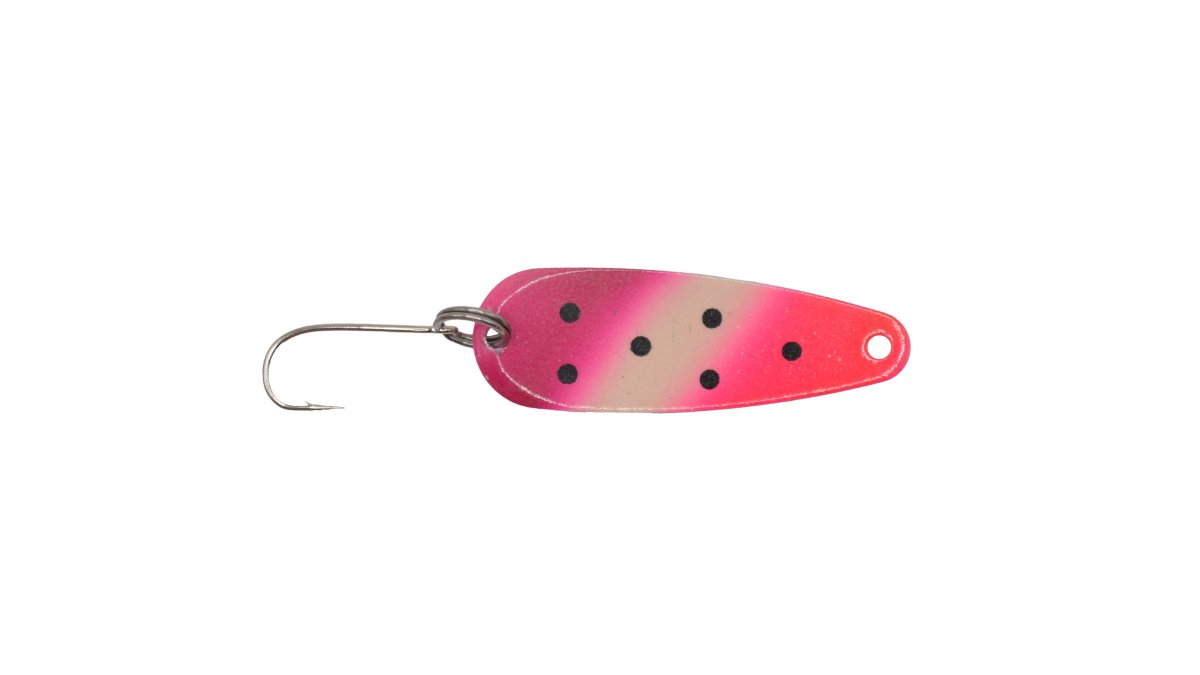
Spoons are simple metal lures that flash and vibrate, working great for trolling and casting. The Predator - Glow - Pink & Plum spoon works well slow-trolled at 1.4-1.7 mph for kokanee and trout.

Soft plastics give you control over size and color.
Jigs combine a weighted head with soft plastic bodies, sinking fast and staying in the strike zone longer.
Topwater lures create surface disturbance and noise, working best in low light and shallow water.
Spinners combine a spinning blade with a body, creating flash and vibration.
Fishing Lure Action and Retrieval Techniques
How you move your lure matters as much as which lure you choose. Here's the cadence, rod-tip work, and speed ranges for each major lure type.
Soft Plastics: The Lift-and-Drop
Texas-rigged worms, craws, and creature baits are bottom-contact lures. The core retrieve is a lift-and-drop: cast, let the bait hit bottom, take up slack, lift the rod tip from 10 to 12 o'clock, and let it fall on a semi-tight line. Most strikes come on the fall, so watch the line, a tick, jump, or sideways move means set the hook.
Jigs: Hop, Drag, or Swim
A jig can be fished three ways, and the right one depends on fish mood:
- Hop: Short 6-12 inch rod-tip snaps with a pause between. Best for cold, lethargic fish and around rock.
- Drag: Slow, steady retrieve with the jig ticking bottom. Best for prespawn and postspawn bass and for walleye on flats.
- Swim: Steady retrieve with the jig 1-3 feet off bottom. Best when fish are chasing bait higher in the column.
A 3/8-ounce jig with a craw trailer is a common starting point; go to 1/2 ounce in current or wind, 1/4 ounce in shallow, calm water.
Spinnerbaits and Bladed Jigs: Steady with Deflection
Spinnerbaits are reaction baits. Use a steady, medium-speed crank, roughly 2-3 mph, with occasional rod-tip twitches to flare the skirt. The key is deflection: when the bait hits cover, kill the retrieve for a half-second and let the blades flutter, that pause is when most strikes happen. In stained water, add a trailer and slow-roll along the bottom; in clear water, burn it just under the surface.
Crankbaits: Speed and Deflection
Crankbait action is built in, so your job is speed and contact. Crank a squarebill fast enough to bounce off cover, the deflection triggers strikes. A deep diver needs a slower, steady retrieve to stay on its dive curve.
Topwater: Walk, Pop, and Chug
Topwater cadence depends on the bait:
- Walkers (spooks, sammys): Rod-tip down, steady reel with rhythmic twitches, "walk the dog" side to side. Speed up in warm water, slow to a crawl in low light.
- Poppers: Sharp rod-tip snap, then a 1-3 second pause. The pause is where strikes come.
- Prop baits: Steady retrieve with brief pauses; the prop does the work.
Fish topwater in low light, around dawn and dusk, and during overcast conditions. If fish swipe and miss, add a small trailer hook or switch to a smaller profile.
Spoons: Trolling Speed and Casting Flutter
Trolling spoons have a narrow speed window: kokanee and trout spoons run best at 1.2-1.8 mph, salmon and striper spoons at 2.0-3.0 mph. Too slow and the spoon won't wobble; too fast and it spins and twists your line. Add a ball-bearing swivel. When casting, let the spoon flutter on a tight line, the fall is the trigger.
Spinners (In-Line): Steady in Current
In-line spinners like Rooster Tails and Mepps work best with a steady retrieve just fast enough to spin the blade. In current, cast upstream and let the blade tick bottom as it swings down. In still water, use a slow, steady crank with occasional pauses.
Reading the Strike
How a fish takes the lure tells you what to change:
- Short strike / swipe and miss: Downsize the lure or add a trailer hook.
- Follow but no eat: Change color or speed up slightly.
- Tap-tap but no hookup: You're feeling the bait, not the fish, slow down and let the fish commit.
- Solid thump: Set the hook hard and keep tension.
Start with the standard cadence for your lure type, then adjust speed, pause length, and rod-tip action until you find what the fish want that day.
Adjust Your Selection for Water Depth and Temperature
Water depth and temperature are two of the biggest factors controlling fish behavior.
Deep water (15+ feet) requires lures that sink fast and create vibration, spoons, jigs, and heavier presentations.
Cold water slows everything down. Use slow-moving lures, patient retrieves, and smaller presentations.
Warm water activates fish. Faster retrieves, larger lures, and bright colors trigger strikes.
A practical approach combines these factors:
- Deep + cold = small, slow jigs or soft plastics
- Shallow + warm = topwater or fast-moving lures
- Deep + warm = larger spoons or fast spinners
- Shallow + cold = small, natural-colored soft plastics
Troubleshooting When Lures Aren't Producing
You're casting, your technique is solid, but nothing's biting. Here's a symptom-based diagnostic to fix it in order, from cheapest change to most disruptive.
Step 1: Confirm Fish Are Present
Before changing your lure, confirm there are fish in front of you. Look for:
- Surface activity (busts, swirls, baitfish scattering)
- Birds diving or working the water
- Baitfish schools on your electronics or visible near structure
- Temperature breaks or current seams where bait stacks
If you see none of these after 15-20 minutes, move. No lure fixes an empty spot.
Step 2: Diagnose the Symptom
Match what you're seeing to the likely cause:
| Symptom | Likely Cause | First Fix |
|---|---|---|
| No bites, no follows | Wrong depth or wrong area | Change depth before changing lure |
| Follows but no strikes | Lure action or color is off | Downsize or switch color |
| Short strikes / swipes | Lure too big or hooks too far back | Add trailer hook or downsize |
| Bites but no hookups | Hookset timing or hook gauge | Slow down, wait for weight, check hook sharpness |
| Fish spook on approach | Too much flash or noise in clear water | Go natural color, smaller profile, longer casts |
| Bites stop mid-retrieve | Lure leaves strike zone | Slow down or switch to a deeper-diving bait |
Step 3: Change One Variable at a Time
The biggest mistake is changing everything at once, switch color, size, and depth together and you learn nothing. Change in this order, giving each at least 10-15 casts:
- Depth, Move your lure up or down in the water column first. This is the most common fix.
- Speed, Slow down or speed up your retrieve. Cold-front fish want slow; warm, aggressive fish want fast.
- Size, Downsize one step. A 3-inch bait becomes a 2.5-inch; a 1/2-ounce jig becomes 3/8.
- Color, Go from natural to bright, or bright to natural. In stained water, add chartreuse or orange; in clear water, go to natural shad or ghost patterns.
- Action, Switch lure type entirely (e.g., from a crankbait to a soft plastic) only after the first four changes fail.
Step 4: Match the Forage
Look at what's in the water. See 2-inch shad flickering? Throw a 2-inch shad-profile bait. Crawfish molting? Throw a brown-orange craw. Insects hatching? Throw a small, natural-colored offering. Matching the hatch is the highest-percentage adjustment on a tough day.
Step 5: Account for Conditions
Some days the bite is genuinely off and no lure change fixes it. Dropping pressure ahead of a front triggers a short feeding window; a bluebird sky after a front shuts fish down. In those conditions:
- Slow way down and fish tight to cover
- Downsize and use natural colors
- Fish the low-light windows (dawn, dusk, overcast)
- Target deeper, more stable water
Step 6: Know When to Move
A practical rule: if you've made three meaningful changes (depth, speed, size) with no bites or follows in 30 minutes, move. Fish the new area with the same lure that got follows before changing again, sometimes fish just aren't where you're fishing.
Frequently Asked Questions
How do you choose the right fishing lure for different water conditions?
Start by identifying three factors: target species, water clarity, and depth. In clear water, use natural colors and smaller lures that match local forage. In stained or muddy water, switch to bright colors and larger lures with more vibration. For deep water, choose lures that sink quickly or use weighted options. Combine these decisions with water temperature, cold water calls for slower-moving presentations, while warm water allows faster retrieves. The Guide Bundle includes dodgers and squids in multiple colors, giving you options across these conditions.
What's the difference between hard baits and soft plastics when selecting fishing lures?
Hard baits like spoons and crankbaits cast farther, produce more vibration, and work well in deeper water or fast current. Soft plastics offer realistic baitfish appearance, work in shallow cover, and allow slower, more controlled retrieves. Hard baits suit aggressive presentations for active fish; soft plastics excel when fish are cautious or feeding on natural forage. Many anglers carry both, hard baits for exploration and soft plastics for refinement once fish location is confirmed.
How does water clarity affect lure color selection?
Clear water demands natural colors that match local baitfish, silver, white, and subtle patterns. Fish can see detail, so lures should resemble actual prey. Stained water requires brighter, more contrasting colors like chartreuse, orange, and pink to increase visibility. Muddy water calls for the boldest colors and maximum vibration, glow lures excel here. The Predator spoon in Glow Pink & Plum, for example, works well in low-visibility conditions where contrast matters most.
Should I buy individual lures or bundles for better value?
Bundles offer significant savings and eliminate guesswork. The Guide Bundle at $53.95 includes 11 pieces covering multiple colors and styles, giving you variety across water conditions for less than buying individually. The Trophy Pack combines five bundles for $167.95, nearly $62 off retail value. Bundles work best if you fish multiple waters or species throughout the year; they're cost-effective and proven combinations rather than random selections.